

Walk a customer through a few projector spec sheets and you will see two very different brightness numbers — sometimes on the same product. "5500 lumens" on one row, "1400 ANSI" on another. They are not the same number, and the gap between them is the most common cause of channel-side returns we see.
Light-source lumens ("LED lumens", "brand lumens", or just "lumens" with no qualifier) is a measurement of the raw output of the projector's light source — the LED bay itself, before any of the light reaches the LCD panel, the optical path or the lens. It is a real number, but it is a manufacturing number, not a viewing number. It tells you nothing about what shows up on the wall.
ANSI lumens is the long-standing industry standard for measuring what shows up on the wall. The projector is set up at native zoom and focus, projecting a white test pattern, and luminance is measured at nine points across the image and averaged. ANSI is the number a buyer can match to their actual room conditions.
The relationship between the two is not subtle. For the same projector, light-source lumens are typically 2.5 to 3 times higher than ANSI lumens. A unit advertised as "5500 lumens" with no qualifier almost always measures 1500–2000 ANSI on the wall. A "1500 lumens" portable typically measures 400–500 ANSI.
The rule of thumb we give partners: if a spec sheet just says "lumens" with no qualifier, divide by three to get a working ANSI estimate. If the customer is cross-shopping a Cheerlux unit (we publish ANSI directly) against a competitor publishing only "lumens," that division is the only honest way to compare.
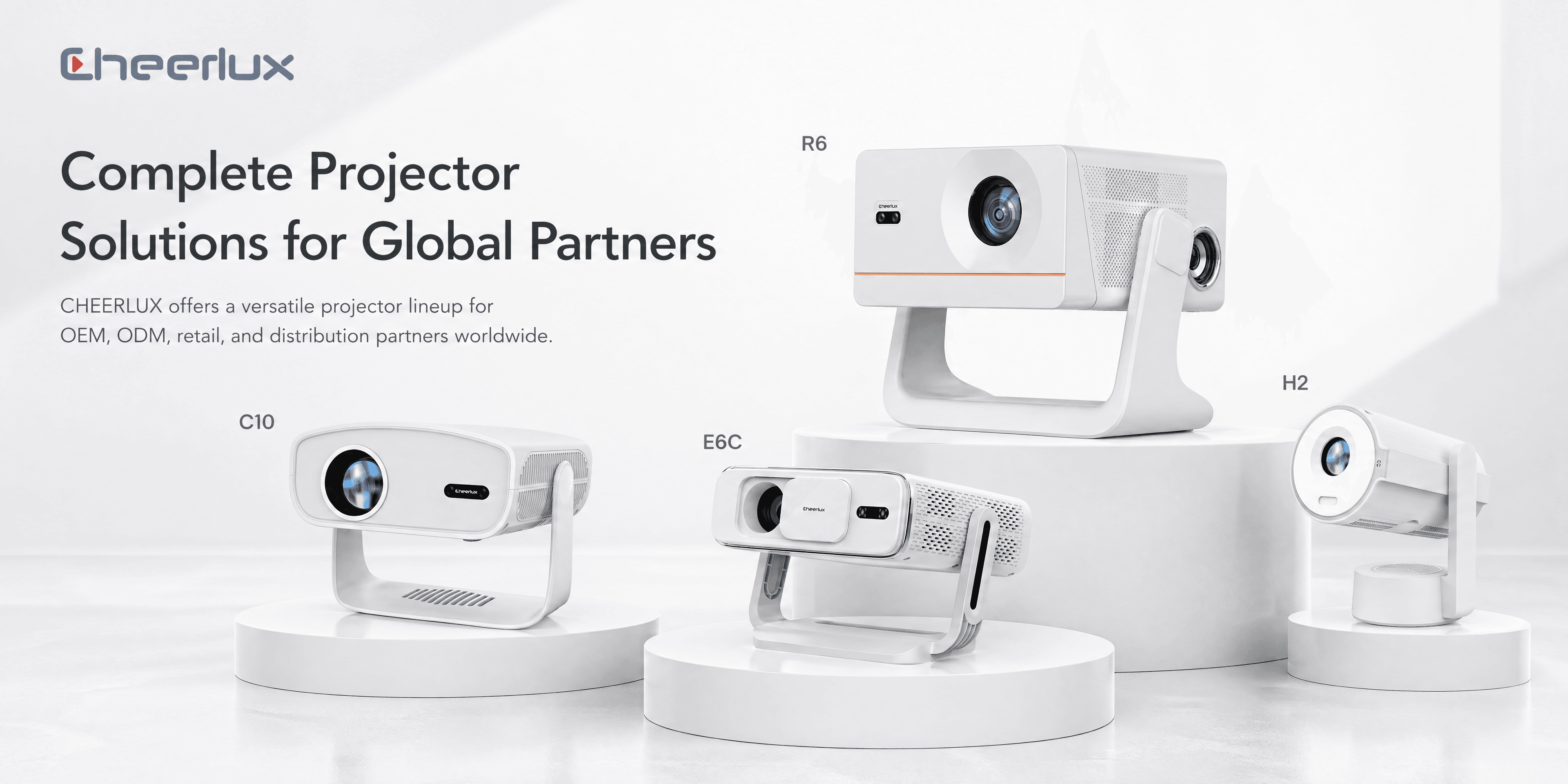
Cheerlux publishes ANSI lumens on every product card and full spec sheet. We do not publish light-source lumens — they are accurate as a manufacturing spec but not useful as a buying spec. Every ANSI figure on a Cheerlux page is measured at our Shenzhen QC lab on production-line samples.